Data foundations
for AI

We turn recordings into labelled datasets and structured observations for training AI and understanding real-world events.

Annotated data, in practice
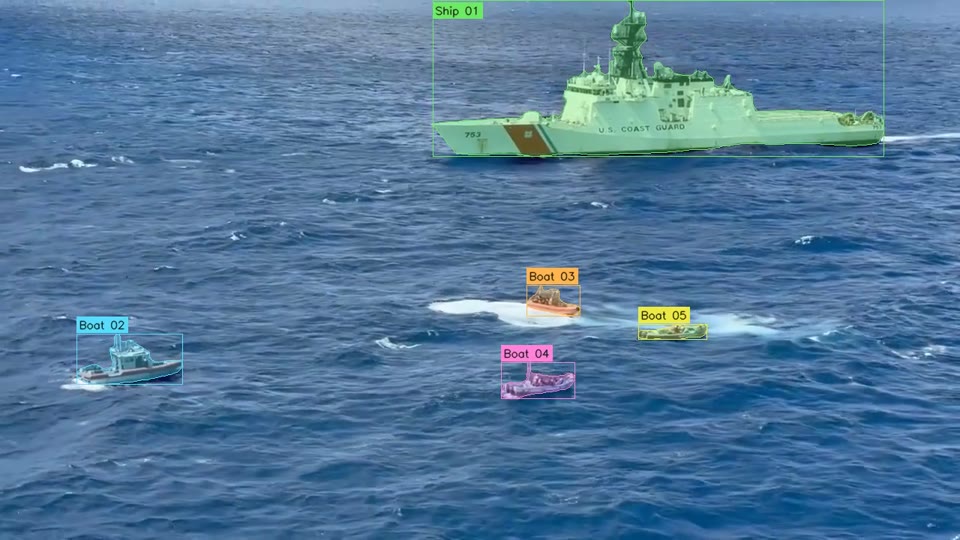
Vessels on open water, with coloured masks and object labels marking the boats.
Vessel masks & object labelsFrame 540 · 18.0 s
Ground · Air · Maritime · Infrastructure & environmentExplore the applications

Applications

Data that helps machines perceive the world and people understand what is happening.

Physical AI

Prepare training and evaluation data for systems that see and act in the physical world.

Object masks and tracks for perception datasets.Landing in dust · draft annotation
Robotics & autonomous systems
Label objects, scene features and movement in footage from robots, drones and fixed cameras.
Perception & detection
Build datasets with object labels, masks and tracks tied to the original recording.
Testing across conditions
Select real footage and explore synthetic examples to cover different environments and hard-to-find cases.
Project output

A source-linked dataset of objects, scene features and movement, with agreed labels and review checks.

Explore perception examples

Situational AI

Turn recordings into structured observations of activity, visible conditions and change for event review.

Describe visible conditions and keep open questions explicit.Visible hull deformation · illustrative annotation draft
Incident review
Describe visible activity and conditions in camera, drone and civilian footage, with links to the source.
Public-source research
Group reposts of the same recording, preserve source history and identify separate viewpoints.
Response planning
Review past events to understand what was observed, what is missing and what needs checking.
Pilot output

Source-linked observations of activity and conditions, with timelines, grouped reposts and clearly marked unknowns.

Explore observations & conditions

One recording.
Two useful outputs.

Objects and scene features support perception. Activity and visible conditions support understanding. Both stay connected to the same recording.

Airborne activity around power infrastructureIllustrative annotation draft · sampled boxesSource 25–29 s · poster 27 s · silent 4-second excerpt.

For Physical AI

Selected objects and scene features.

Objects
Drone; selected bird at 25–25.5 s
Infrastructure
Transmission pylon crossarm
Handoff
Frame-linked annotation coordinates

For Situational AI

A source-linked observation with clear limits.

Observed
Drone and birds appear above the pylon crossarm.
Unknown
Purpose, clearance and infrastructure condition.
Handoff
Observation, source time and open questions
Source & annotation method

Editorial boxes authored on sampled frames of real footage, with linear interpolation between those frames. These proposed outputs are not validated model results or production exports. The record includes sampled source times, coordinates and annotation coverage.

Read the annotation & observation record
Explore ground and maritime examples

What we do

From selecting recordings to preparing a dataset, we shape the work around your project.

Select the data

Find and organise recordings relevant to your task. Keep track of where they came from.

Selected recordings

Label & organise

Prepare object labels, scene features, tracks and descriptions. Agree the annotation method and human review.

Labels & metadata

Explore synthetic data

Use controlled examples to explore gaps in real footage. Agree any partner or simulation work for the project.

Additional test examples

Connect the evidence

Structure observations of activity and visible conditions. Link recordings, reposts and event timelines for review.

Observations & linked records

Explore examples of our data work. Situational AI projects start with a retrospective pilot; live monitoring is a separate scope.

See examples

Trace every recording
back to its source.

One video can appear in dozens of posts, with different crops and captions.

Grouping those copies helps reviewers distinguish repeated footage from a separate observation of the same event.

See how source grouping works
Three posts. One recording.
Public post AReshared post BCropped post C
One recording · three publications
Different viewpointSeparate observation

Illustrative relationships.
No real incident or source claims.

Start with a small project.

Tell us what you need. We’ll agree the data, the output and how to check its quality.

  1. Define the task

    Describe your problem and the recordings you have or need.

  2. Review a sample

    Check a small selection together. Agree the labels, structure and level of review.

  3. Prepare the output

    Receive the agreed data and review notes. Decide what to do next.

Tell us about your project.

What are you building or trying to understand? A short description is enough to start.

Send an enquiry below or email us directly.

Your entries are used only to reply to your enquiry. Privacy details